🌐 HU · EN
Sleep – a foundation of health
Good sleep does not begin at bedtime – we prepare for it from the morning onward.
Andrew Huberman opens the practical section of Protocols with sleep because he presents it as a foundation of physical and mental health, learning, performance and recovery. The 15 sleep protocols are not 15 isolated tricks: they target different parts of a connected 24-hour system.
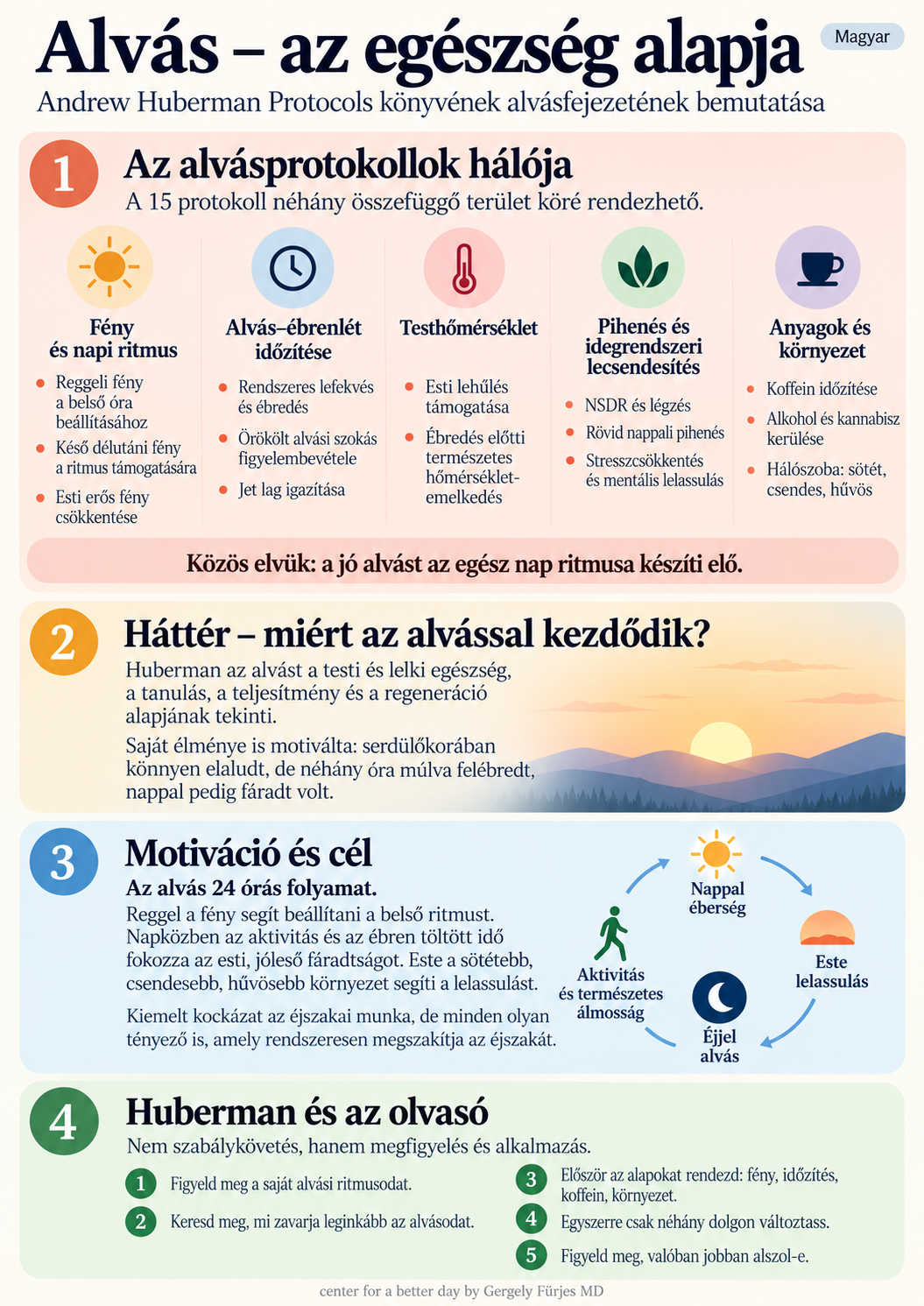
The protocol network – the big picture
- Light and daily timing: morning and late-afternoon natural light, less bright light in the evening.
- Sleep–wake timing: regular sleep and wake times, respecting your inherited sleep timing, and adjusting for jet lag.
- Body temperature: supporting evening cooling and morning warming.
- Rest and nervous-system downshifting: short daytime rest, NSDR, breathing and mental slowing.
- Substances and environment: caffeine timing, avoiding alcohol or cannabis as sleep aids, and a dark, quiet, cool bedroom.
Background
Huberman also describes his own sleep difficulties: as an adolescent he could fall asleep easily, then wake a few hours later and feel tired during the day. One of the chapter’s useful messages is that every night does not have to be perfect; what matters more is sleeping well most of the time.
Motivation and goal
Sleep is a 24-hour process. Morning light helps set internal timing. During the day, activity and time awake gradually build the natural sleepiness that supports sleep at night. In the evening, a darker, quieter and cooler environment helps the system wind down. Night work is an important stressor, but so is anything that regularly interrupts the night.
The reader’s role
The aim is not to execute all 15 protocols perfectly at once. Observe your own rhythm, identify the biggest disruptors, fix the basics first, change only a few things at a time, and then see whether your sleep actually improves.
“Physiologically plausible – but is it clinically demonstrated?”
Next, we will work through the sleep chapter in three groups of five protocols, looking separately at human evidence, effect size, risks and practical usefulness.

